
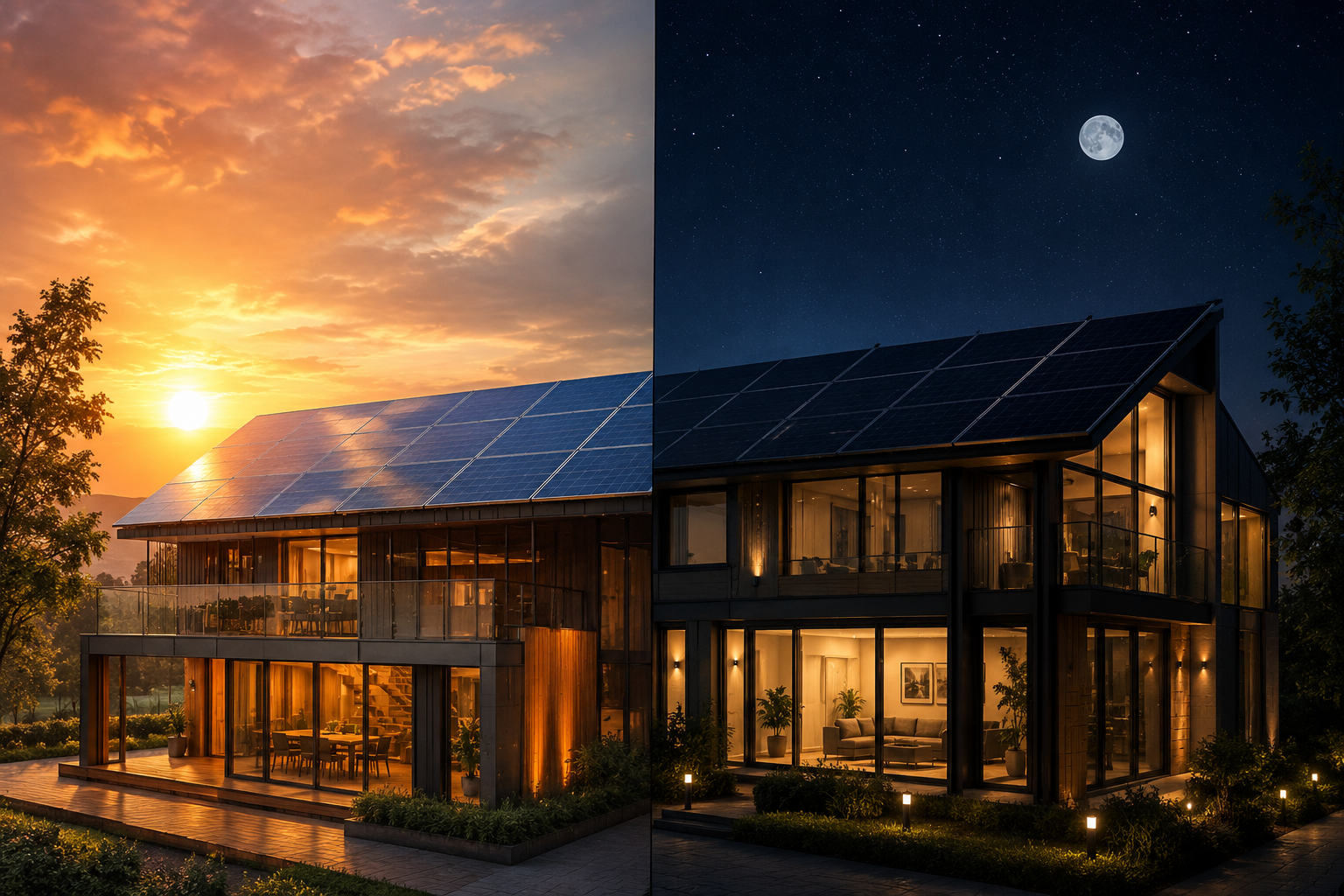
Solar power is often described as energy from the sun, but one of the most common questions people ask is simple:
What happens when the sun goes down?
It is a fair question. After all, solar panels need daylight to generate electricity. But modern solar design is no longer just about producing energy during the day. It is about creating intelligent, efficient buildings that can capture, manage, store, and use energy in a smarter way.
At The Lightworks, we believe the future of buildings is not just solar-powered. It is self-powered.
Solar Does Not Stop Being Useful at Night
Solar panels generate electricity when they receive daylight. During the day, this energy can be used immediately to power a building’s lighting, appliances, heating, cooling, ventilation, technology, and other electrical systems.
But when a solar-powered building is properly designed, the energy produced during the day does not have to disappear once the sun sets.
Instead, it can be stored, managed, and redirected.
This is where good design makes all the difference.
Battery Storage Keeps the Power Flowing
Battery storage allows excess solar energy generated during the day to be saved for later use. This means a building can continue to use solar energy in the evening, overnight, or during periods of lower sunlight.
For homes, this can support everyday energy use after dark.
For commercial buildings, it can help reduce reliance on the grid during peak evening demand, when electricity costs are often higher.
For schools, hospitality venues, offices, farms, and community buildings, it creates greater energy security and resilience.
In simple terms, batteries help solar work beyond daylight hours.
The Building Itself Must Be Designed Smarter
Solar performance is not only about panels and batteries. It is also about the building.
A self-powered building should be designed to reduce energy demand from the beginning. That includes:
- maximising natural daylight
- improving insulation
- using efficient lighting and appliances
- reducing heat loss
- managing ventilation
- integrating solar into the architecture itself
This is where building-integrated solar becomes powerful. Instead of treating solar as an add-on, solar technology can become part of the roof, glass, façade, canopy, greenhouse, or structure.
The result is a building that does not simply consume energy. It actively produces it.
After Dark, Energy Management Matters
Modern solar buildings can be supported by intelligent energy management systems. These systems help decide when to use solar energy, when to store it, and when to draw from the grid if needed.
For example, a building may use solar energy during the day, charge its battery with the surplus, then use that stored energy in the evening.
In some cases, smart systems can also prioritise essential functions such as lighting, security, refrigeration, heating, cooling, or communications.
This creates a more controlled and efficient way to use energy.
Solar Works Best as Part of a Complete System
The question should not be, “Does solar work at night?”
A better question is:
Has the building been designed to make the most of the solar energy it produces?
Solar panels, battery storage, smart controls, efficient materials, and intelligent architecture all work together. When these elements are designed as one system, the building becomes more independent, more resilient, and more cost-effective over time.
The Future Is Self-Powered
The sun may set every evening, but a well-designed solar building does not stop performing after dark.
It continues to benefit from the energy it captured during the day. It uses stored power. It reduces unnecessary demand. It becomes less dependent on rising energy prices and ageing infrastructure.
That is the future The Lightworks is helping to build.
A future where buildings are not passive structures waiting for power.
They are active, intelligent, self-powered spaces designed for the world we are moving into.
Final Thought
Solar after dark is not a limitation. It is a design challenge.
And with the right approach, it becomes an opportunity.
The Lightworks designs self-powered buildings that capture the value of daylight and carry it into the night.