
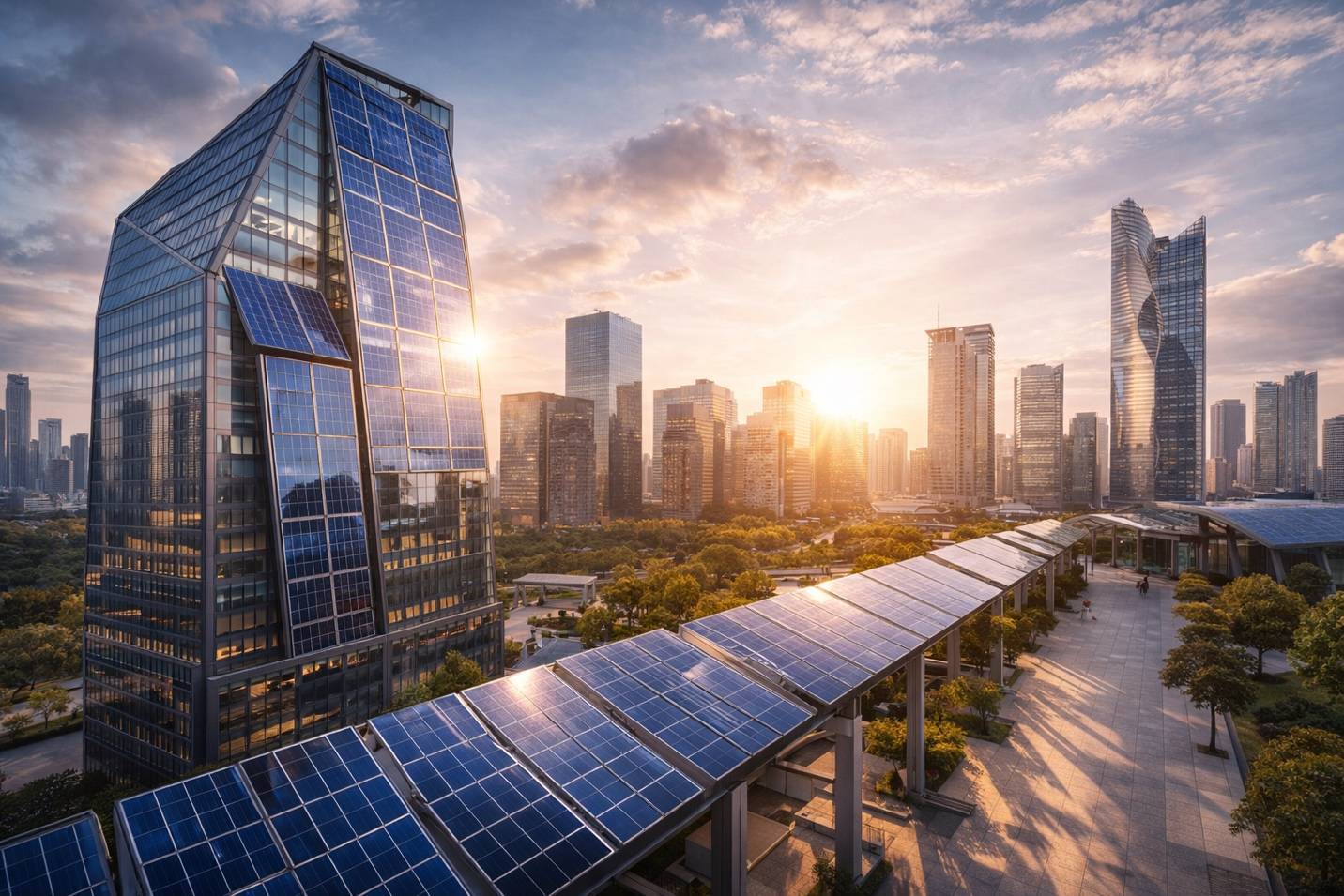
As cities around the world respond to rising energy costs, climate pressures, and rapid urbanisation, a new architectural movement is gaining momentum: solar-integrated design. Known as Building-Integrated Photovoltaics (BIPV), this approach embeds solar technology directly into the structure of buildings—transforming rooftops, facades, and even windows into energy-generating surfaces.
From Europe to Asia, architects and developers are increasingly designing buildings that not only consume energy but actively produce it.
From Add-On to Design Feature
Traditionally, solar panels were considered an afterthought—mounted onto rooftops after construction. Today, they are becoming a central design element.
Architects are now incorporating solar materials seamlessly into:
- Glass facades
- Skylights
- Curtain walls
- Shading systems
This shift allows buildings to maintain sleek, modern aesthetics while contributing to clean energy production. In many cases, solar elements are now indistinguishable from traditional building materials.
The Rise of Net-Zero and Energy-Positive Buildings
The push for net-zero buildings—structures that produce as much energy as they consume—is accelerating globally. Some developments are even going further, becoming energy-positive, meaning they generate excess electricity that can be fed back into the grid.
Countries with strong sustainability policies are leading the way:
- In Europe, regulations are pushing for near-zero energy buildings as standard.
- In Asia, high-density urban environments are adopting vertical solar solutions.
- In Australia, solar-ready housing is becoming increasingly common in new developments.
These trends are reshaping not only how buildings look, but how they function within the energy ecosystem.
Why Solar Architecture Is Trending Now
- Energy Security Concerns
Recent geopolitical tensions and disruptions in fossil fuel supply chains have highlighted the risks of relying on imported energy. Solar-integrated buildings offer decentralised, locally generated power. - Rising Energy Costs
With electricity prices fluctuating worldwide, building owners are looking for long-term cost stability. Solar architecture reduces dependence on external energy sources. - Sustainability Goals
Governments and corporations are under increasing pressure to meet carbon reduction targets. Integrating solar into buildings is one of the most effective ways to reduce emissions at scale. - Advancements in Technology
New innovations—such as transparent solar glass and flexible photovoltaic materials—are expanding the possibilities for design and application.
Real-World Applications Expanding Rapidly
Solar architecture is no longer limited to experimental projects. It is being applied across:
- Commercial office buildings
- Hotels and resorts
- Educational campuses
- Residential developments
Large-scale projects are now demonstrating that solar integration can be both economically viable and visually compelling.
A New Standard for Future Cities
Experts predict that solar integration will soon become a standard feature in urban development rather than a niche innovation. As cities grow and energy demands increase, buildings themselves will play a critical role in energy generation.
This marks a fundamental shift in architecture—from passive structures to active contributors within a decentralised energy network.
The Bigger Picture
The convergence of architecture and solar technology represents more than a design trend—it signals a transformation in how we think about buildings, energy, and sustainability.
As the global push for resilience and efficiency intensifies, solar-integrated architecture is emerging as one of the most practical and scalable solutions for the future of urban living.