
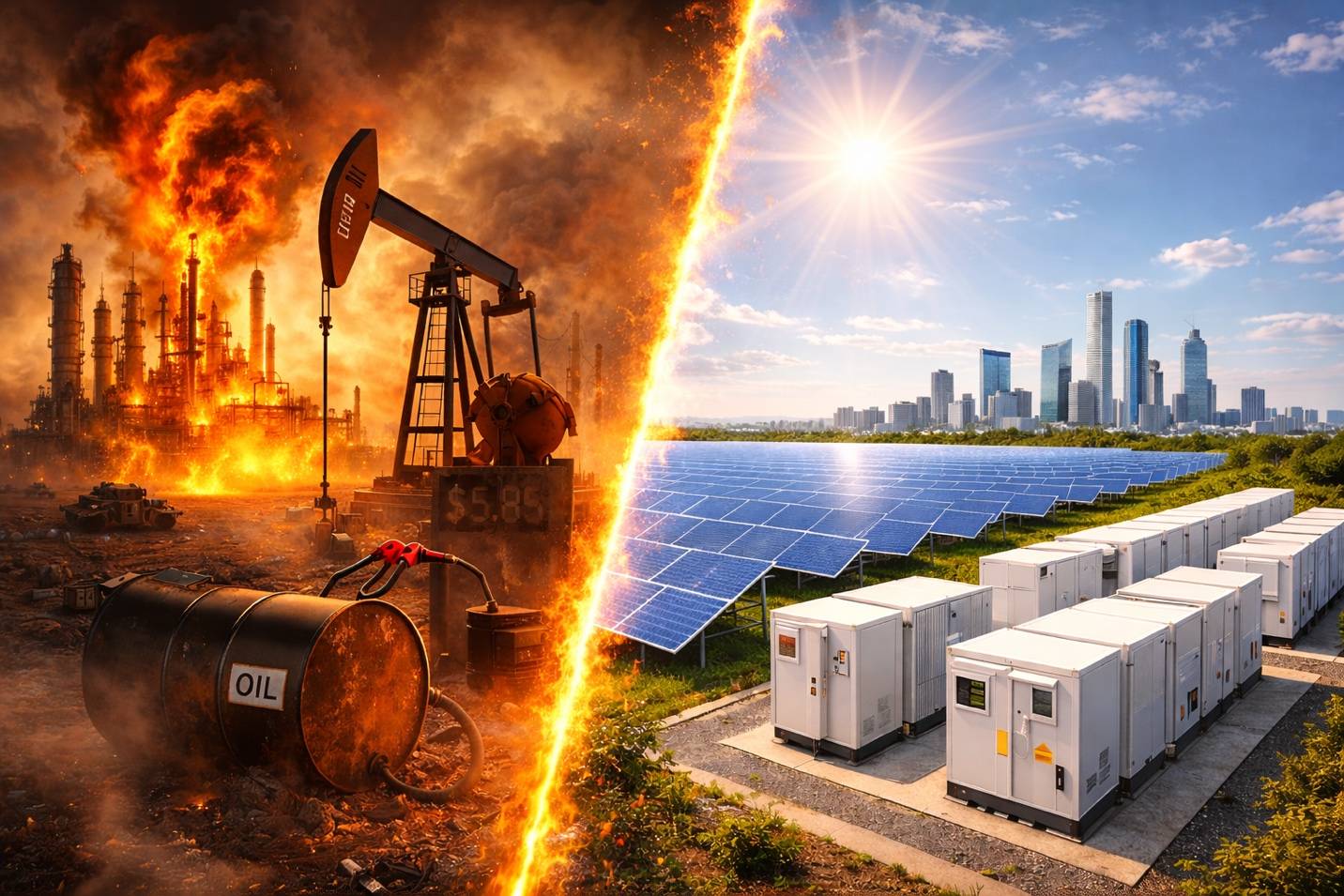
How War and Rising Gas Prices Are Accelerating the Transition to Renewable Power
Global energy markets have once again been shaken by geopolitical tensions and armed conflicts in key regions of the world. As wars disrupt supply chains and fuel exports, countries are experiencing rising oil and gas prices, creating economic pressure on governments, businesses, and households.
In response, many nations are accelerating investments in renewable energy, particularly solar power, as a way to reduce dependence on volatile fossil fuel markets.
Energy Markets Under Pressure
When conflicts occur in regions that produce or transport oil and natural gas, global energy markets can react almost immediately. Supply disruptions, sanctions, and shipping risks often cause energy prices to rise.
For many countries that rely heavily on imported fossil fuels, this creates significant challenges such as:
- Higher electricity prices
- Increased transportation costs
- Rising manufacturing expenses
- Economic uncertainty for industries and households
Recent geopolitical tensions have once again highlighted how fragile fossil fuel supply chains can be.
Solar Energy as a Strategic Solution
As gas prices increase, solar energy becomes increasingly attractive. Unlike fossil fuels, solar power relies on free and abundant sunlight, meaning once a solar system is installed, energy costs remain relatively stable.
This stability is one of the main reasons governments and companies are expanding solar investments.
Solar energy offers several key advantages during energy crises:
- Energy independence from imported fuels
- Stable electricity costs
- Reduced exposure to geopolitical risks
- Lower long-term energy expenses
For many countries, solar power is now viewed not just as an environmental solution but also as a strategic energy security investment.
Businesses Turning to Solar Infrastructure
Commercial buildings, hotels, factories, and agricultural facilities are increasingly adopting solar systems to protect themselves from unpredictable energy costs.
Solar installations combined with battery energy storage systems allow businesses to generate and store their own electricity, reducing reliance on external energy markets.
This trend is accelerating globally as organizations seek greater control over their operational energy expenses.
The Rise of Self-Powered Infrastructure
Modern solar technology is transforming buildings into self-powered energy hubs. Solar panels integrated into rooftops, facades, and infrastructure allow buildings to generate clean electricity on-site.
This approach can dramatically reduce energy bills while also supporting global climate goals.
At the same time, advances in battery technology allow excess solar power to be stored and used during nighttime hours or peak demand periods.
A Turning Point for Global Energy
Historically, many major shifts in energy policy have been triggered by geopolitical events. Today’s conflicts are once again pushing governments and industries to reconsider how energy is produced and distributed.
The result is a growing global focus on renewable energy systems that provide stability, security, and long-term sustainability.
Solar energy is emerging as one of the most important technologies in this transition.
Building a More Resilient Energy Future
As global uncertainty continues, the shift toward solar infrastructure is likely to accelerate. Countries and businesses are recognising that investing in renewable energy not only helps the environment but also strengthens energy resilience and economic stability.
At The Lightworks, the vision is to support this transformation by designing intelligent buildings and infrastructure that integrate solar power and sustainable energy systems.
By combining innovative design with advanced solar technologies, the future of energy is moving toward clean, resilient, and self-powered environments.