
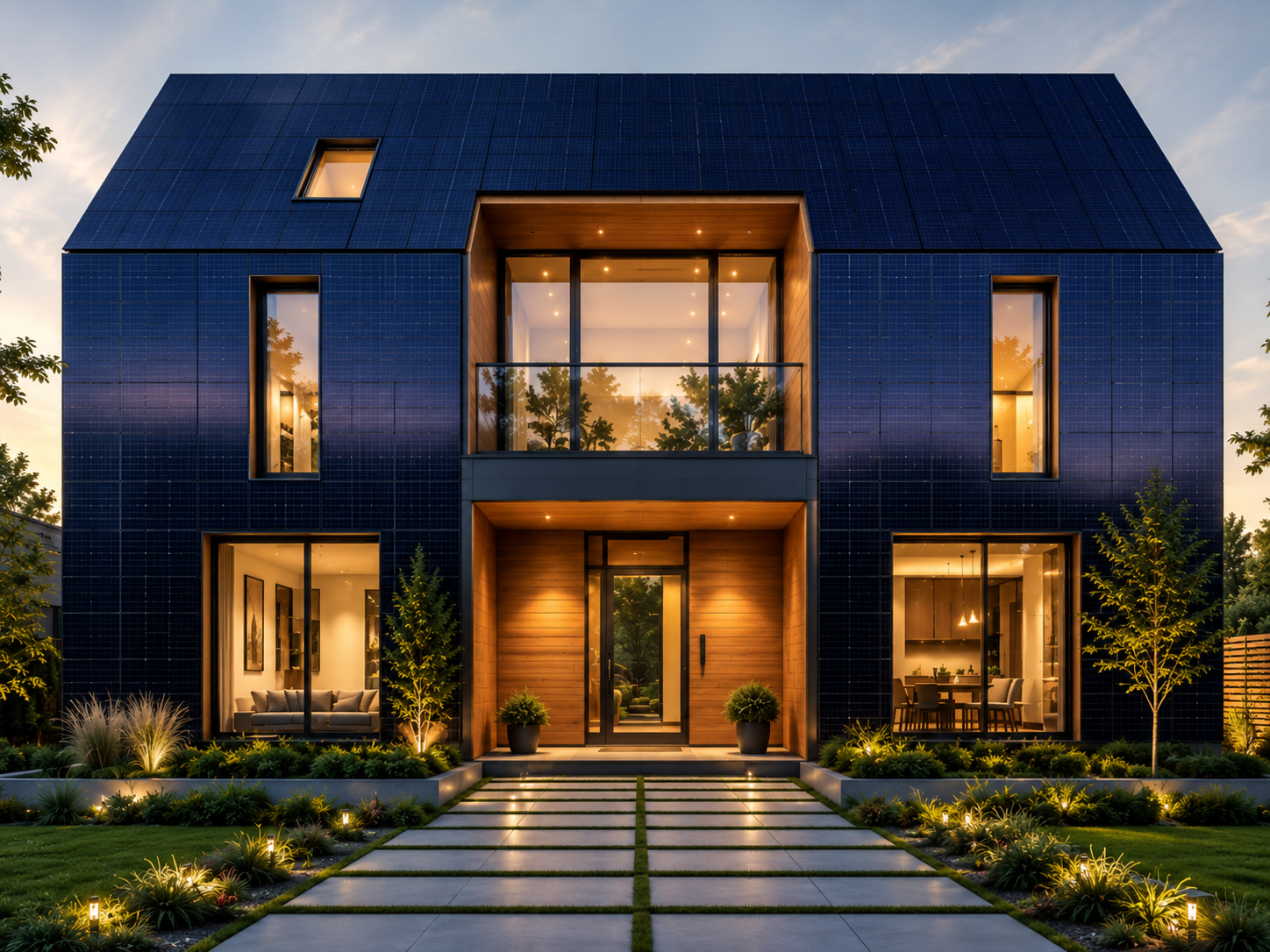
Solar energy is no longer just something added to a building after it is complete. Today, solar technology can be part of the architecture itself, shaping how buildings look, perform, and support a more sustainable future.
This is where solar-integrated architecture comes in.
Rather than treating solar panels as an attachment, solar-integrated design brings renewable energy into the structure of the building. Roofs, façades, canopies, glass, shading systems, and even walkways can be designed to capture sunlight while still maintaining beauty, function, and architectural intent.
For The Lightworks, this approach represents the future of energy-efficient design: buildings that do more than provide shelter. They generate power, reduce operational costs, and contribute to a cleaner energy future.
What Is Solar-Integrated Architecture?
Solar-integrated architecture combines building design with solar energy systems from the very beginning of the planning process.
Instead of installing solar panels as a separate feature, architects, designers, and solar specialists work together to make solar technology part of the building’s form and function.
This can include:
- Solar rooftops
- Solar façades
- Building-integrated photovoltaics
- Solar glass
- Solar shading systems
- Solar carports and canopies
- Solar greenhouses
- Energy-efficient lighting and power systems
The goal is simple: create buildings that are practical, attractive, and capable of producing their own clean energy.
Why It Matters
Buildings are among the largest energy consumers in the world. From lighting and heating to cooling, appliances, and daily operations, commercial and residential buildings require a constant energy supply.
Solar-integrated architecture helps reduce that demand from the grid by turning unused surfaces into energy-producing assets.
A roof is no longer just a roof.
A façade is no longer just a wall.
A canopy is no longer just shade.
With the right design, these surfaces can become part of a building’s energy solution.
A Smarter Approach to Building Design
One of the greatest advantages of solar-integrated architecture is that it encourages smarter planning.
When solar is considered early, the building can be designed to maximise sunlight, improve energy performance, and reduce unnecessary energy loss. This may include positioning the building for better solar exposure, selecting materials that improve efficiency, and designing spaces that work naturally with daylight and ventilation.
The result is a building that feels better, performs better, and costs less to operate over time.
Beauty and Sustainability Can Work Together
A common misconception is that solar technology compromises the appearance of a building. In reality, modern solar solutions can enhance architectural design.
Solar glass, sleek panel systems, and integrated façades can be used to create clean, contemporary structures that look intentional and refined. For commercial buildings, this also communicates a strong commitment to innovation and sustainability.
For schools, churches, hotels, offices, and residential developments, solar-integrated architecture offers a way to combine visual appeal with real environmental impact.
Lower Energy Costs Over Time
One of the most practical benefits of solar-integrated buildings is the potential for long-term energy savings.
By generating electricity on-site, buildings can reduce their reliance on traditional energy sources. This can help lower utility bills, improve energy security, and protect owners from rising energy costs.
For businesses and organisations, this can also support stronger budgeting and long-term operational planning.
Supporting Net Zero Goals
As more communities, businesses, and governments move towards net zero targets, solar-integrated architecture will become increasingly important.
Buildings designed with renewable energy in mind can help reduce carbon emissions and support cleaner local energy systems. When paired with battery storage, energy-efficient lighting, and smart power management, solar-integrated buildings can become even more resilient and self-sufficient.
The Future of Architecture Is Energy-Producing
The future of architecture is not only about how buildings look. It is about how they perform.
Solar-integrated architecture allows buildings to become active contributors to the energy system. They can generate clean power, reduce waste, and support a more sustainable way of living and working.
At The Lightworks, we believe that great design should do more than stand beautifully in the sun. It should work with the sun.
Build With the Sun in Mind
Solar-integrated architecture is more than a design trend. It is a practical, forward-thinking solution for the future of buildings.
Whether for homes, schools, commercial spaces, churches, hotels, or community developments, integrating solar into architecture creates long-term value for people, businesses, and the planet.
The Lightworks helps design solar power systems that support smarter, cleaner, and more energy-efficient buildings.