
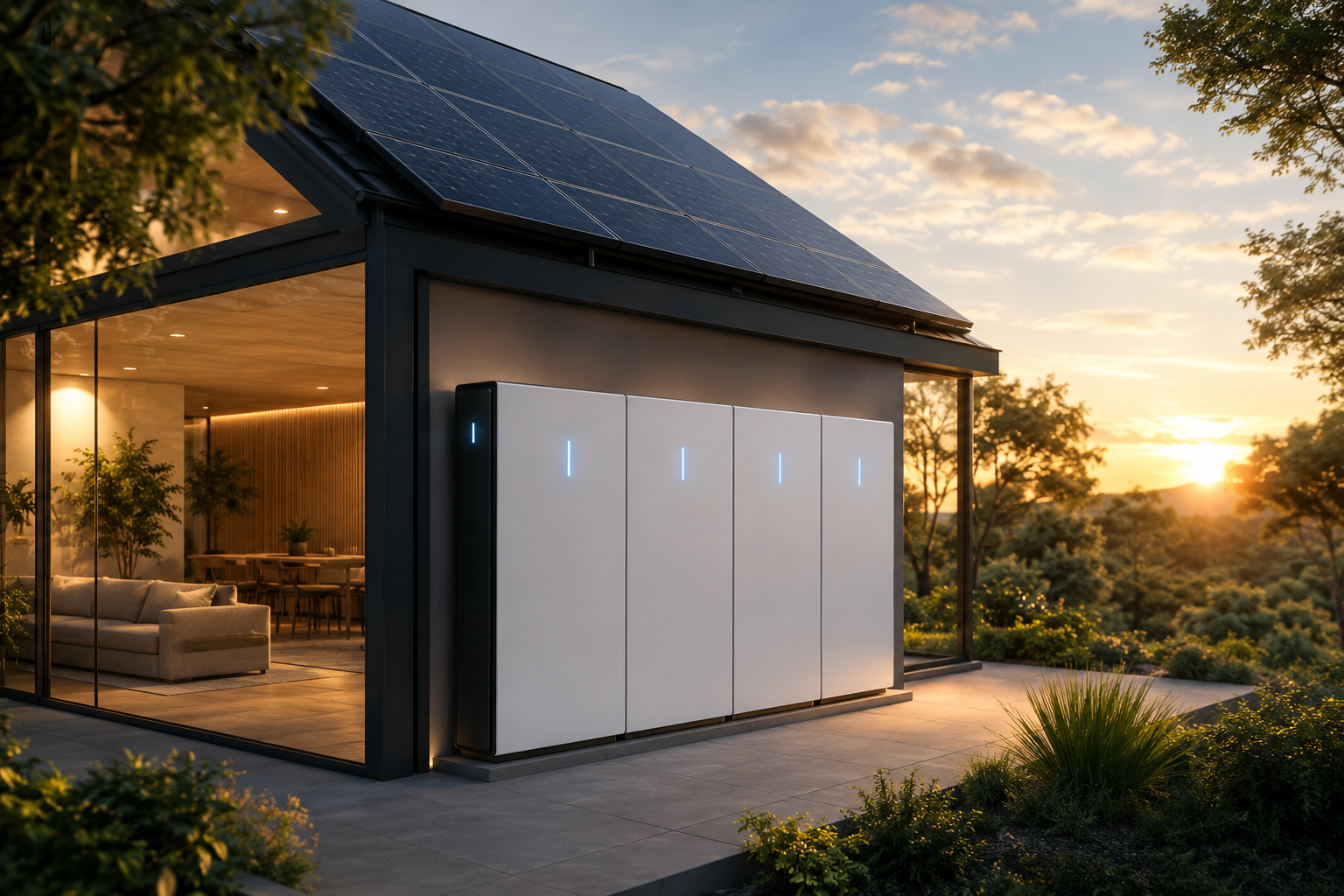
Solar power has already changed the way we think about energy. It has moved us away from relying entirely on centralised power stations and towards a cleaner, more independent future. But there is one challenge solar has always had to solve: the sun does not shine all the time.
That is where battery storage comes in.
For years, solar panels have been the visible symbol of renewable energy. They sit on rooftops, glasshouses, commercial buildings and solar farms, quietly converting sunlight into electricity. But without storage, much of that energy is only useful when it is being generated. Battery systems change that completely. They allow buildings to store surplus solar power during the day and use it later when demand is higher, electricity prices increase, or the grid is under pressure.
In many ways, batteries are the missing piece of the solar puzzle.
Solar Is Powerful, But Storage Makes It Practical
A solar system can produce clean electricity during daylight hours, often when a building may not be using all of it. Without storage, excess power is usually exported back to the grid. While this can still be beneficial, it does not always deliver the full value of the energy being produced.
Battery storage allows that unused energy to be saved instead.
This means a home, school, hotel, commercial building or greenhouse can use more of its own solar power rather than buying electricity back from the grid later. It turns solar from a daytime energy source into a more flexible, round-the-clock solution.
For businesses, this can help reduce operating costs. For households, it can increase energy independence. For communities, it can support a more stable and resilient energy network.
Energy Storage Supports Self-Powered Buildings
At The Lightworks, we believe the future of buildings is not simply about using less energy. It is about designing buildings that can produce, manage and store their own power more intelligently.
This is especially important for self-powered buildings, solar glasshouses and commercial structures that need reliable energy throughout the day and night.
A building with solar panels can generate clean electricity. But a building with solar and battery storage can go further. It can capture energy when the sun is available and use it when it is needed most. This makes energy design more efficient, more sustainable and more aligned with the needs of modern living.
Battery storage is not just an add-on. It is part of the foundation for the next generation of energy-smart buildings.
Reducing Pressure on the Grid
As more people switch to electric vehicles, heat pumps, smart appliances and energy-intensive technologies, electricity demand continues to rise. This places growing pressure on national grids, especially during peak hours.
Battery storage can help ease this pressure.
By storing solar energy during the day and using it during peak demand periods, buildings can reduce their reliance on the grid when energy demand is highest. This can help create a more balanced energy system and reduce the need for additional fossil fuel-based backup power.
When used at scale, battery storage can support not only individual buildings but entire communities.
A Smarter Way to Use Renewable Energy
The battery revolution is not only about storing electricity. It is about using energy more intelligently.
Modern battery systems can be connected to smart energy management technology, allowing buildings to monitor energy use, prioritise stored power and respond to changing conditions. This makes it possible to design spaces that are more efficient, more responsive and more future-ready.
For example, a solar-powered building could use stored energy in the evening, support essential systems during outages, or reduce grid consumption during expensive peak periods.
This is where solar becomes more than a clean energy source. It becomes a complete energy strategy.
The Future Is Solar Plus Storage
Solar energy has already proven its value. It is clean, renewable and increasingly accessible. But when paired with battery storage, its potential becomes even greater.
Batteries give solar energy flexibility. They make it available after sunset. They improve energy independence. They support self-powered buildings. They help reduce costs and strengthen resilience.
The future of energy will not be built on solar alone. It will be built on solar, storage and intelligent design working together.
At The Lightworks, we see battery storage as a key part of the transition towards buildings that are not only beautiful and functional, but also capable of producing and managing their own clean power.
The battery revolution is already here. And it may be the missing piece that allows solar to reach its full potential.
The Lightworks
Designing smarter, cleaner and more self-powered spaces for the future.