
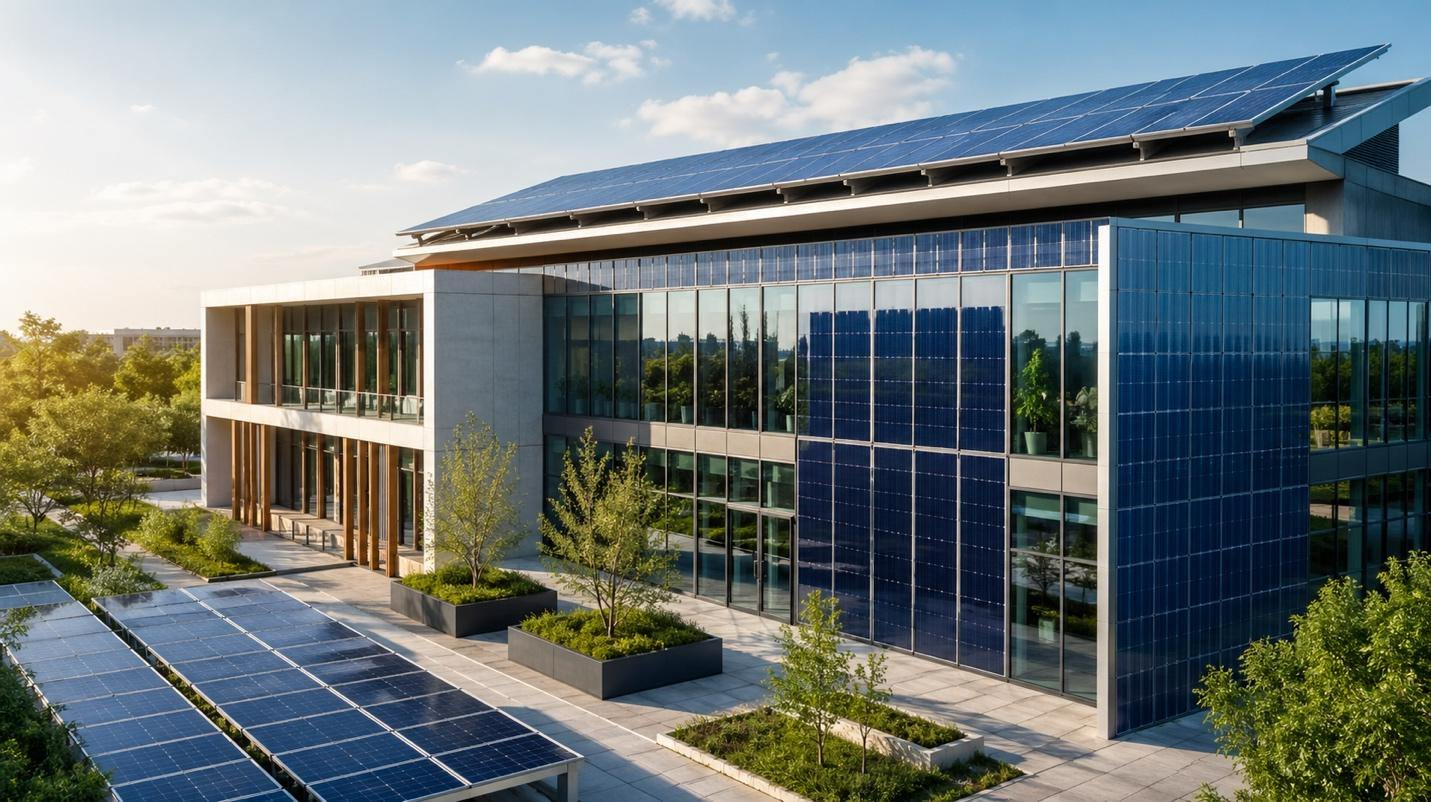
As energy costs continue to rise and sustainability becomes a major priority for businesses, commercial buildings must do more than simply consume power. They must become part of the solution. This is where self-powered buildings are changing the future of architecture, construction, and energy management.
A self-powered commercial building is designed to generate, manage, and optimise its own energy through integrated renewable technologies. These can include solar panels, building-integrated photovoltaics, battery storage, smart lighting systems, energy-efficient controls, and intelligent power management. Instead of relying completely on the grid, these buildings use their rooftops, façades, windows, and surrounding spaces to produce clean electricity.
This shift is not only about sustainability. It is also about practicality, long-term savings, and resilience. Businesses today face increasing pressure from rising operational costs, energy uncertainty, and environmental expectations. A building that can generate part of its own power gives owners and tenants more control over energy use and future expenses.
For commercial properties, energy efficiency is no longer a luxury. It is becoming a standard. Offices, hotels, schools, warehouses, shopping centres, and mixed-use developments all require large amounts of electricity to operate. Lighting, heating, cooling, ventilation, equipment, security systems, and digital infrastructure all contribute to ongoing energy demand. By integrating renewable energy and smart systems into the design of a building, businesses can reduce waste and improve performance from the start.
One of the most exciting developments in this space is building-integrated photovoltaics, also known as BIPV. Unlike traditional solar panels that are added to a roof after construction, BIPV can become part of the building itself. Solar glass, solar façades, canopies, skylights, and shading systems can all help generate electricity while still supporting the overall design of the property. This means renewable energy can be both functional and visually integrated.
At The Lightworks, we believe that sustainable design should not compromise beauty, comfort, or performance. Solar technology no longer needs to look like an afterthought. With thoughtful planning and the right systems, renewable energy can become a seamless part of modern architecture. A building can be elegant, efficient, and intelligent at the same time.
Self-powered buildings also support stronger energy resilience. When paired with battery storage and smart controls, a commercial property can store excess energy generated during the day and use it when needed. This can help reduce reliance on the grid during peak demand periods and provide greater stability during outages or energy disruptions. For businesses where continuity matters, this can be a valuable advantage.
The environmental benefits are equally important. Buildings are major contributors to energy consumption and carbon emissions. By producing clean power on-site and reducing unnecessary energy use, commercial properties can play a meaningful role in lowering emissions. This helps businesses work towards sustainability targets while also contributing to a cleaner and more responsible energy future.
There is also a strong branding advantage. Businesses that invest in self-powered buildings show customers, employees, investors, and communities that they are serious about innovation and environmental responsibility. A sustainable building can become a visible statement of leadership. It reflects a company’s values and its commitment to long-term thinking.
The future of commercial property is not just about constructing better buildings. It is about creating smarter buildings that generate, conserve, and manage energy more effectively. Every surface has potential. Every design decision can contribute to greater efficiency. Every commercial space can become part of a cleaner energy network.
As renewable technology continues to advance, businesses that invest early in self-powered design will be better prepared for the future. They will be able to reduce energy costs, improve building performance, meet sustainability expectations, and create spaces that are more efficient and resilient.
The Lightworks is committed to helping businesses reimagine what commercial buildings can become: self-powered, visually refined, energy-efficient, and designed for the future.