
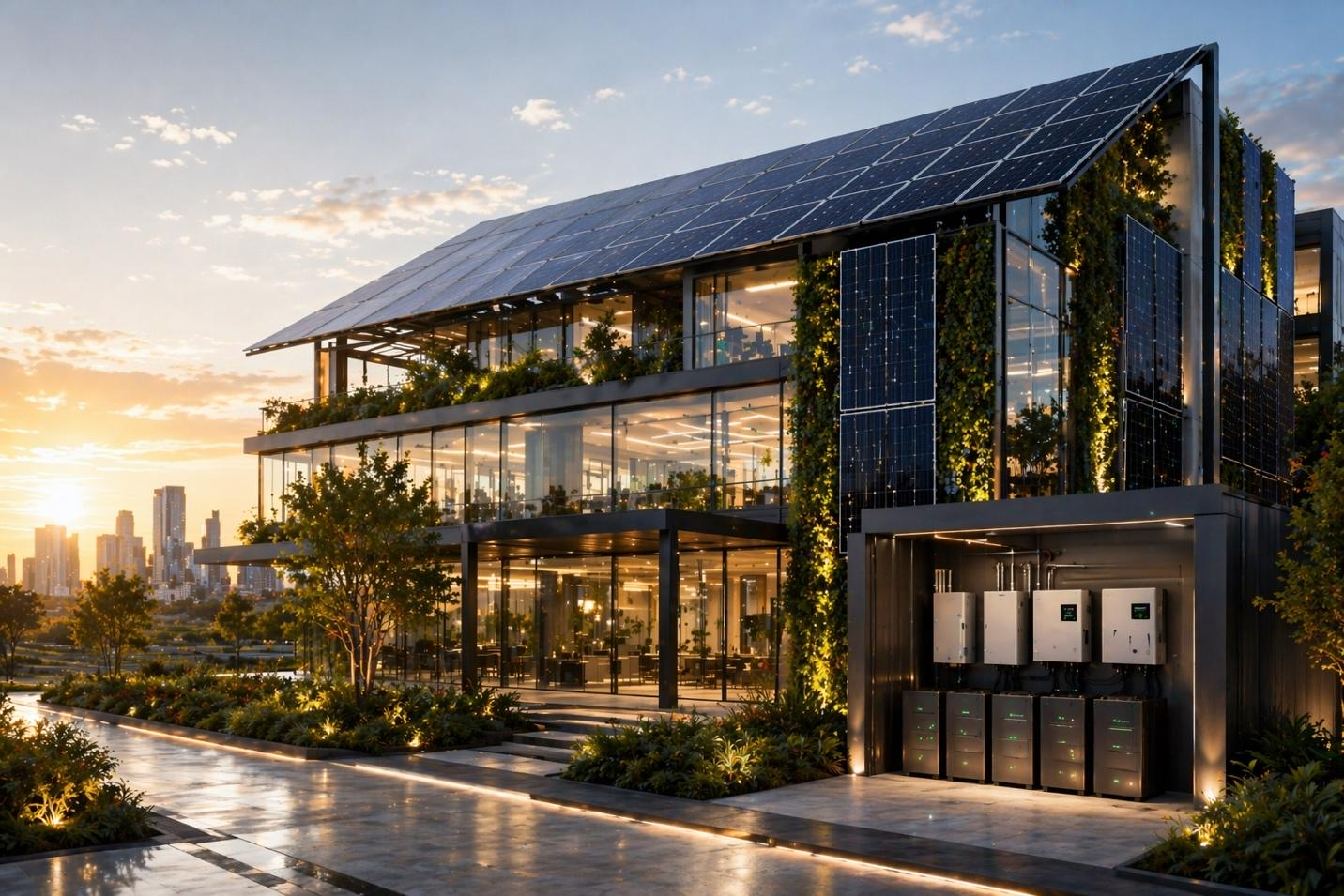
The Global Energy Landscape Is Transforming
The global energy landscape is undergoing a profound transformation. Rising energy costs, increasing pressure to meet climate targets, and ageing infrastructure are forcing industries to rethink how buildings are designed, powered, and operated.
The traditional model—where buildings rely entirely on external energy sources—is rapidly becoming inefficient, costly, and unsustainable.
In its place, a new paradigm is emerging: buildings that generate their own power.
At The Lightworks, we believe the future lies in energy-independent structures—intelligent buildings designed from the ground up to produce, manage, and optimise their own energy through integrated solar architecture.
The End of Passive Buildings
For decades, buildings have been treated as passive energy consumers. Electricity flows in, and energy is used without much consideration for how it is generated or how efficiently it is consumed.
However, this model is no longer viable in a world where:
- Energy prices are volatile and rising
- Power grids are under increasing strain
- Sustainability targets are becoming mandatory
- Businesses demand greater control over operating costs
Modern buildings must evolve from passive consumers into active energy participants—capable of generating, storing, and managing their own power.
What Is Integrated Solar Architecture?
Unlike traditional solar installations that are added after construction, integrated solar systems are embedded directly into the building’s design.
This includes:
- Solar panels incorporated into roofs and façades
- Photovoltaic glass and shading systems
- Solar canopies and structural elements
- Seamless integration with battery storage systems
By designing with solar from the outset, buildings achieve:
- Higher energy efficiency
- Cleaner, more cohesive aesthetics
- Optimised performance based on orientation and sunlight exposure
The result is not just a building with solar panels—but a fully engineered energy system.
The Rise of Energy-Independent Infrastructure
Energy-independent buildings are designed to operate with minimal reliance on external power sources. By combining solar generation with battery storage and smart energy management systems, they create a self-sustaining energy ecosystem.
This approach delivers multiple long-term benefits:
- Reduced operational costs: Energy is generated on-site, significantly lowering electricity bills over time.
- Increased asset value: Energy-efficient buildings command higher market value and attract premium tenants and investors.
- Greater resilience: Buildings remain operational during grid outages or energy disruptions.
- Protection against price volatility: On-site energy generation reduces exposure to fluctuating fuel and electricity prices.
- Lower carbon footprint: Clean energy production directly supports sustainability and net-zero targets.
Battery Storage: Completing the System
A critical component of energy-independent buildings is battery energy storage.
Solar panels generate electricity during the day, but energy demand does not stop when the sun goes down. Battery systems store excess energy for use at night or during peak demand periods, ensuring a consistent and reliable power supply.
This transforms buildings into 24/7 power systems, capable of operating independently when needed.
A Shift Driven by Economics and Policy
The transition toward self-powered buildings is not only driven by environmental concerns—it is increasingly driven by economics.
Governments worldwide are introducing:
- Net-zero building regulations
- Renewable energy incentives
- Carbon reduction mandates
- Energy efficiency standards
At the same time, businesses are recognising that energy independence is a competitive advantage.
Lower costs, improved resilience, and sustainability credentials are no longer optional—they are essential.
Designing the Buildings of the Future
The buildings of tomorrow will not simply consume energy—they will:
- Generate electricity through integrated solar systems
- Store power using advanced battery technology
- Distribute energy intelligently based on demand
- Support electric vehicle charging and smart infrastructure
- Contribute excess energy back to the grid
This represents a fundamental shift in how we think about architecture, transforming buildings into decentralised power stations.
The Lightworks Vision
At The Lightworks, the mission is to lead this transformation by designing self-powered buildings and energy-integrated environments that combine performance, sustainability, and design excellence.
By merging architecture with energy engineering, The Lightworks is helping shape a future where buildings are not just structures—but active contributors to the global energy ecosystem.
Conclusion
The shift toward energy-independent buildings is no longer a distant concept—it is already underway.
As technology advances and global energy challenges intensify, the adoption of solar-integrated infrastructure will accelerate across industries and regions.
The question is no longer if buildings will become power generators—it’s how soon they will become the standard.